Electrochemical Biosensors for Allergen Detection in Atmosphere: An SDG-3 Driven Approach for Asthma Monitoring and Allergy Pattern Tracing
Abstract
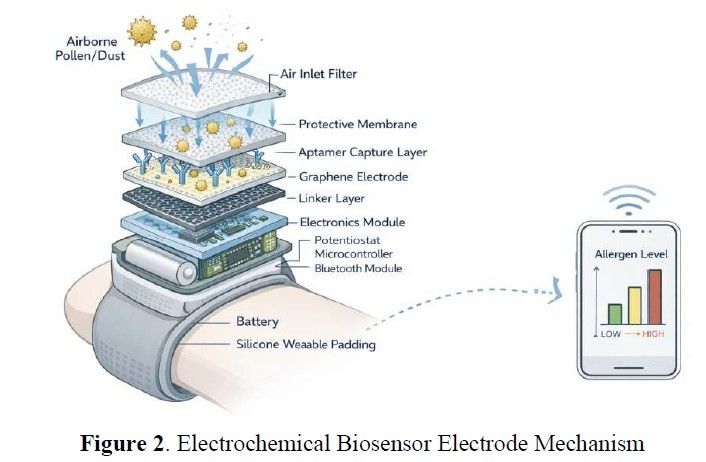
Abstract- Airborne allergens such as pollen proteins and dust mite particles are major triggers of asthma and allergic reactions, yet conventional detection techniques are typically laboratory based, time-consuming, and unsuitable for continuous monitoring. This review discusses recent developments in electrochemical biosensing technologies and their potential for real-time environmental allergen detection. It further proposes a compact
wearable sensing platform designed to monitor allergen exposure directly in a user’s surroundings.allergen-pecific
The suggested device utilizes functionalized electrodes coupled with biorecognition probes that produce measurable electrochemical variations when target particles bind to the sensing interface. The resulting electrical signal is conditioned, digitized, and transmitted wirelessly to a smartphone for visualization and exposure tracking. Emphasis is placed on high sensitivity, selectivity, rapid response, and multiplex capability for detecting multiple allergens simultaneously while maintaining portability and user comfort. By integrating advanced materials, miniaturized electronics, and wireless communication, wearable electrochemical biosensors provide a practical approach for personalized environmental health monitoring. Continuous exposure information may help individuals and clinicians recognize allergen patterns, anticipate symptom aggravation, and implement preventive strategies, thereby improving management of asthma and related allergic disorders.